RAM Price Cycles and When to Buy DDR5 Kits
AI-driven HBM production has permanently altered DDR5 pricing, making patience pointless.
DDR5 buying now calls for a different kind of patience. AI-driven manufacturing shifts have disrupted the old RAM price cycle, so waiting for a return to cheap memory is not the same as waiting for a useful discount. The better approach is to separate long-term supply forecasts from short-term kit prices, then buy the capacity and speed your build actually needs.
Why DDR5 prices in late 2026 are unlike any previous memory shortage builders have planned around
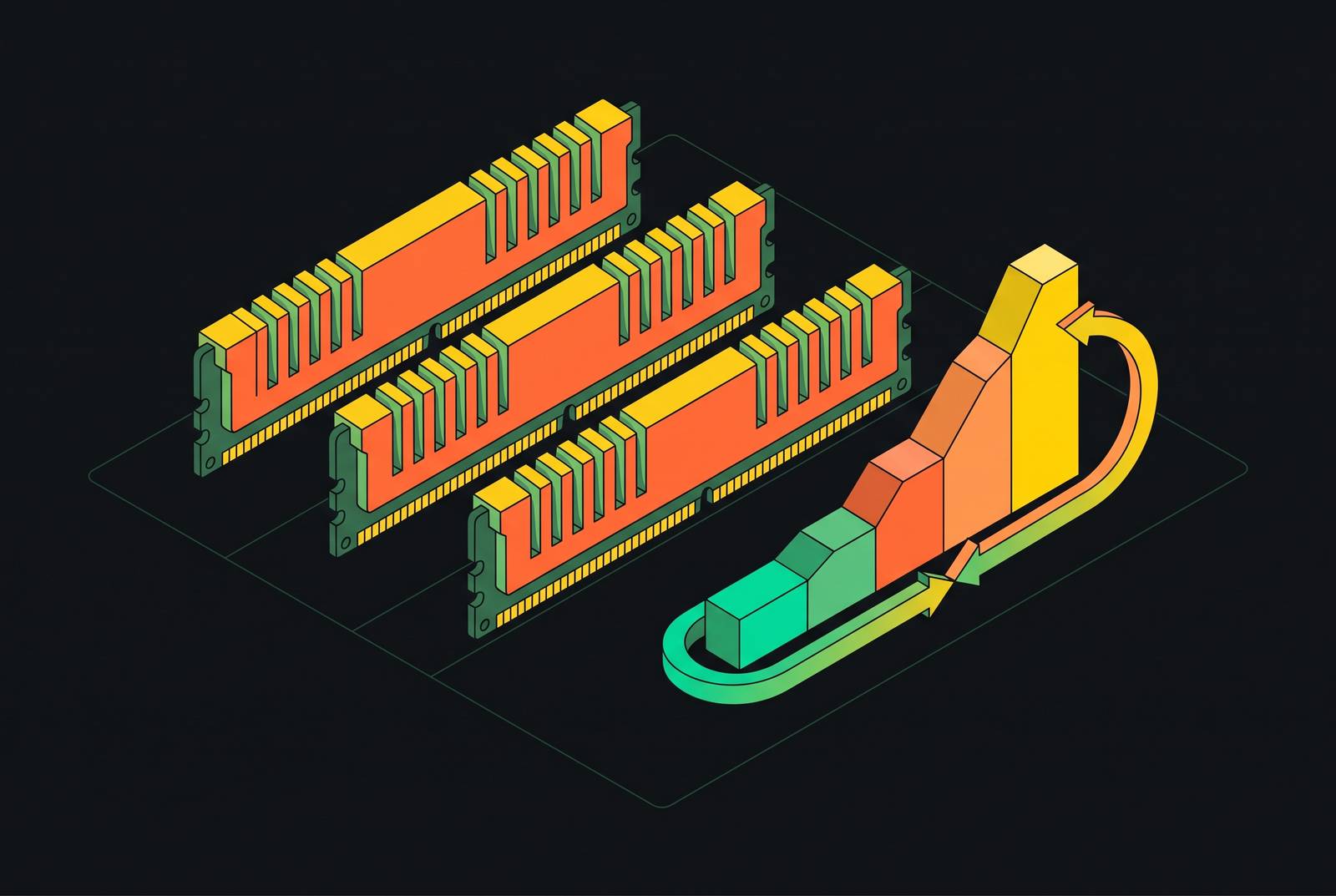
A mainstream 32GB DDR5-6000 CL30 kit cost 7.7 times more in October 2026 than at its cheapest point in April 2025. That reversal captures the speed and depth of the consumer memory repricing. This is not simply an expensive stretch for high-end kits. A computer science researcher analyzing a Stanford University memory price database found that DDR5 now costs in nominal terms what DDR2 cost in 2008. The comparison puts the market back at a price level it has not occupied in nearly two decades.
Past shortages offer a poor guide to what happens next. The 2017 DRAM crunch and 2021 component crisis were driven by demand spikes or yield problems that eased once manufacturing caught up. The current shortage instead reflects a deliberate change in what memory suppliers make. Higher consumer prices alone do not undo that change in what suppliers make.
How AI chip manufacturing physically removes DDR5 supply from the consumer market
Samsung, SK Hynix, and Micron independently shifted manufacturing capacity away from commodity DRAM toward High Bandwidth Memory, or HBM, for AI accelerators and data center servers. Those customers offer far higher margins. The key physical constraint is that producing HBM consumes roughly three times the wafer capacity of standard DDR5 per gigabyte. Stacking yield loss and the smaller dies used inside make the conversion costly in manufacturing terms. Capacity moved to HBM therefore removes a disproportionate amount of potential consumer DDR5 supply.
Samsung began HBM4 mass production in early 2026, taking wafer starts away from commodity DDR5 while PC and server makers were trying to get stock. Micron’s FY2026 10-K states that HBM3E 12-high represented the majority of its HBM shipments. The same filing says HBM4 36GB 12-high was in volume production and samples of HBM4 48GB 16-high had been sent to key customers. The manufacturers have made production commitments.
Micron also retired its consumer-facing Crucial brand by February 2026 after announcing the decision in December 2025. It said it would focus on enterprise customers, including data centers and artificial intelligence. Capacity is already producing for customers with long-term agreements rather than sitting idle waiting for DDR5 prices to justify switching it on.
What the traditional "wait for the dip" cycle looked like, and where it no longer holds
The old memory cycle gave buyers a good reason to wait. An oversupply glut pushed manufacturers to cut output, tighter supply raised prices, and new capacity eventually brought prices down. Demand could also moderate while retailers built up inventory. Together, those changes created the conditions for a sustained correction.
Those forces are delayed or disrupted this time. Micron’s marketing executive has said its new Idaho fab will not deliver meaningful output until mid-2027. Meanwhile, store shelves that were bare in late 2025 have begun filling with unsold kits because buyers will not pay current prices. That looks encouraging from the shop floor, but analysts describe it as demand destruction.
The manufacturer inventory signal is more telling. Samsung and SK Hynix finished DRAM inventory fell to under 10 days of supply as of September 7, 2026. The familiar trigger of high supplier inventory followed by contract price cuts has not arrived. Patience still has a role, but it needs a narrower target than an assumed return to 2025-era lows.
Where analysts disagree on the recovery timeline, and what that means for a builder's planning horizon
Forecasts do not agree on when meaningful relief will arrive. The more hopeful planning window is Q1–Q2 2027, when some softening may become possible. More cautious assessments put a broader recovery later. TechInsights’ June 2026 outlook says prices are unlikely to fall much and warns that 2027 may be even harder for buyers. The forecasts disagree on the direction of prices as well as the timing of a turn.
The shared caution is more useful than any single forecast. A return to 2024 lows is unlikely before 2027 at the earliest, while buyers waiting for 2025-era prices also face a long horizon. Neither expectation makes early 2027 a promised reset. A window for softening means prices might ease from an elevated level.
There are also reasons not to treat every delay as a guaranteed price increase. DDR5 retail prices fell month-on-month in March 2026, and long-term supply agreements with price ceilings are starting to hold back further price rises in the near term. A local ceiling can therefore exist well before a true correction. Builders with flexible schedules should target 2027, with Q1–Q2 as a possible window for relief. Builders who cannot wait need a purchase strategy that works without that forecast coming true.
Why DDR5 is not optional for builders on current mainstream platforms
AMD’s AM5 platform exclusively supports DDR5, so DDR4 cannot serve as a temporary substitute on an AM5 motherboard. Intel’s LGA1851 platform also requires DDR5. For a new build on either current mainstream platform, the memory choice is therefore constrained before price enters the discussion.
DDR4 is not a reliably cheap refuge anyway. Manufacturers are phasing it out rather than preserving it as a low-cost alternative, and its year-over-year price increases are also well above historical norms. DDR4 and DDR5 even reached price parity at points in 2025. Budget builders at the $750–$1,000 tier still have a legitimate option in AM4 with DDR4 because total build costs can favor it. That is a deliberate platform downgrade, however, and staying with DDR5 means facing repricing across entry-level and high-capacity kits alike.
The specific triggers that have historically produced brief DDR5 price relief within the elevated range
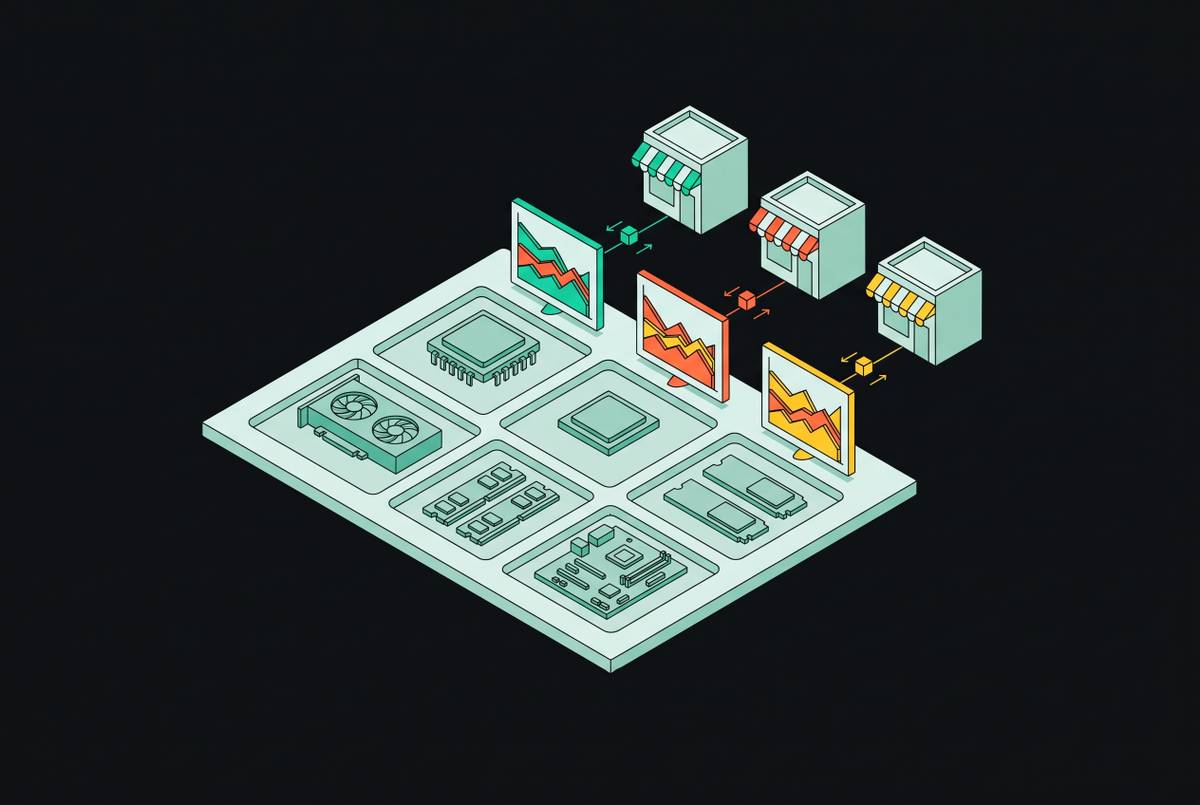
DDR5 prices still fluctuate within the elevated range, leaving room to save without waiting for the manufacturing shortage to end. A local discount can make the kit you need cheaper even when the wider market remains expensive. That is the kind of opening a builder with a near-term deadline can use.
These chances to save have come at several points in the year. The period after Black Friday / Cyber Monday comes on the heels of the biggest retail sale for PC components. January post-holiday clearance gives retailers another reason to reduce stock. Major CPU platform launches can also shift demand toward a new specification, briefly softening prices for older kits. Relief at these points can vary by compatible kit.
Manufacturer earnings offer a different signal. When DRAM makers report high inventory, the pressure to cut contract prices has tended to reach stores within weeks. That trigger matters, but it must actually appear before it supports a buying decision. For now, track the price history of the specific kit you need and set an alert for a meaningful drop below its current tracked minimum. A category average cannot tell you whether that particular kit is on a useful sale.
How to spec DDR5 for the platforms that matter, so you're not overpaying for speed you can't use
A discount only helps if the kit suits the platform. For AMD AM5 gaming builds, DDR5-6000 with CL30–CL32 timings is the established sweet spot for balancing memory latency and bandwidth. At current prices, paying for a higher advertised rate that adds little performance adds to an already high bill. The cheapest mistake is the one avoided before ordering.
Going above DDR5-6000 on AM5 without careful EXPO profile support risks compatibility issues. An overspecified kit can cost more yet run at a lower speed by default. In that case, the number on the box is not the speed the build actually uses.
G.Skill Trident Z5 RGB DDR5-7200 belongs in the discussion for enthusiast overclocking builds. That use is distinct from the straightforward AM5 gaming target, so it should not become the default merely because it is faster on paper. Intel’s LGA1851 DDR5 requirement likewise establishes only the memory generation. The kit to aim for has supported settings that fit the planned build. Once that target is settled, capacity becomes the next way to control the bill.
The capacity and kit-selection decisions that limit your exposure while the market is hot
Buying 32GB rather than 64GB is the strongest straightforward way to limit exposure to current prices. Most gaming and general-use builds do not yet saturate 32GB, so doubling capacity is not an urgent upgrade for those uses. That does not make 64GB wasteful when a workload requires it. It means capacity should follow a present need rather than an aspiration to fill every possible future role.
AM5 also offers a more constrained compromise. A builder can buy a single 16GB stick now and add a matching stick later, spreading the cost across two market conditions. The first stage runs in single-channel at reduced bandwidth. That carries a real performance penalty for gaming and bandwidth-sensitive workloads, so it is not a cost-free route to the same result.
The urgency of the build should decide how much waiting is reasonable. A blocked build, a failed current system, or a workload that needs more memory today makes a possible 12–18 month wait costly in lost productivity or delayed use. In those cases, buying the needed capacity on a meaningful kit-level dip is more defensible than waiting indefinitely for structural relief. For the purchase to be sensible, it has to provide needed use at a price that fits the situation.
Counterfeit DDR5 modules have appeared with empty plastic chips relabeled with real part numbers, so buy from established stores that allow returns and check what is in the box in person where possible. V-Color’s “1+1 DDR5 Value Pack” is a legitimate product, but it mixes real DDR5 sticks with dummy RGB-only modules at prices reaching close to $300 in available regions. A visually fuller configuration is not necessarily a higher-capacity one.
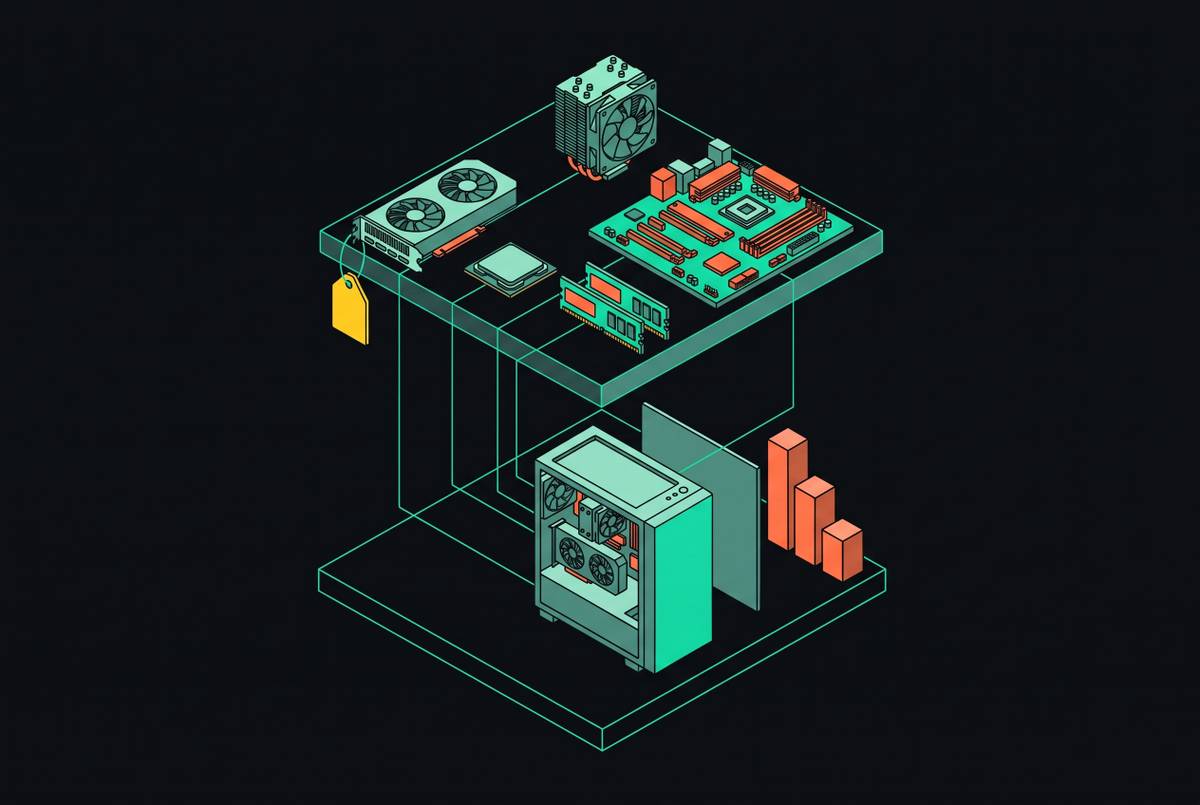
Planning the full build before buying helps prevent these errors from stacking up. A 3D configurator with real-time compatibility checking can surface mismatches in the intended memory configuration before parts ship. That planning is especially valuable when correcting the wrong speed or capacity means another expensive purchase. The goal is not perfect market timing, but a compatible kit, enough usable memory, and a purchase window that matches when the computer is actually needed.