PC Building Platforms With Regional Retailer Coverage Compared
Local retailer coverage and update frequency matter more than regional reach when building a PC.
PC building platforms with regional retailer coverage solve different problems, even when their price tables look similar. The right choice depends on whether a platform shows parts you can actually buy locally, at prices recent enough to trust. This comparison separates local price tracking from currency conversion and managed sourcing, so the tool fits your geography and budget before you buy.
Why regional pricing gaps frustrate builders more than compatibility errors
A build fits the budget until the retailer will not ship to your country. The listed price is from another market, the stock flag shows what is in stock in another country, and the parts sold locally cost more. Even the compatibility guidance may steer the build around components that do not ship where you live. The plan works only on the screen.
That can waste more time than a straightforward compatibility mismatch. A mismatch shows what needs to change, while a price from another market can quietly shape the whole budget. A builder may spend hours refining a parts list before discovering that its price point never existed locally. By then, the problem is not just replacing one component but reconsidering the choices built around its supposed cost.
What "regional retailer coverage" actually means — and what it doesn't
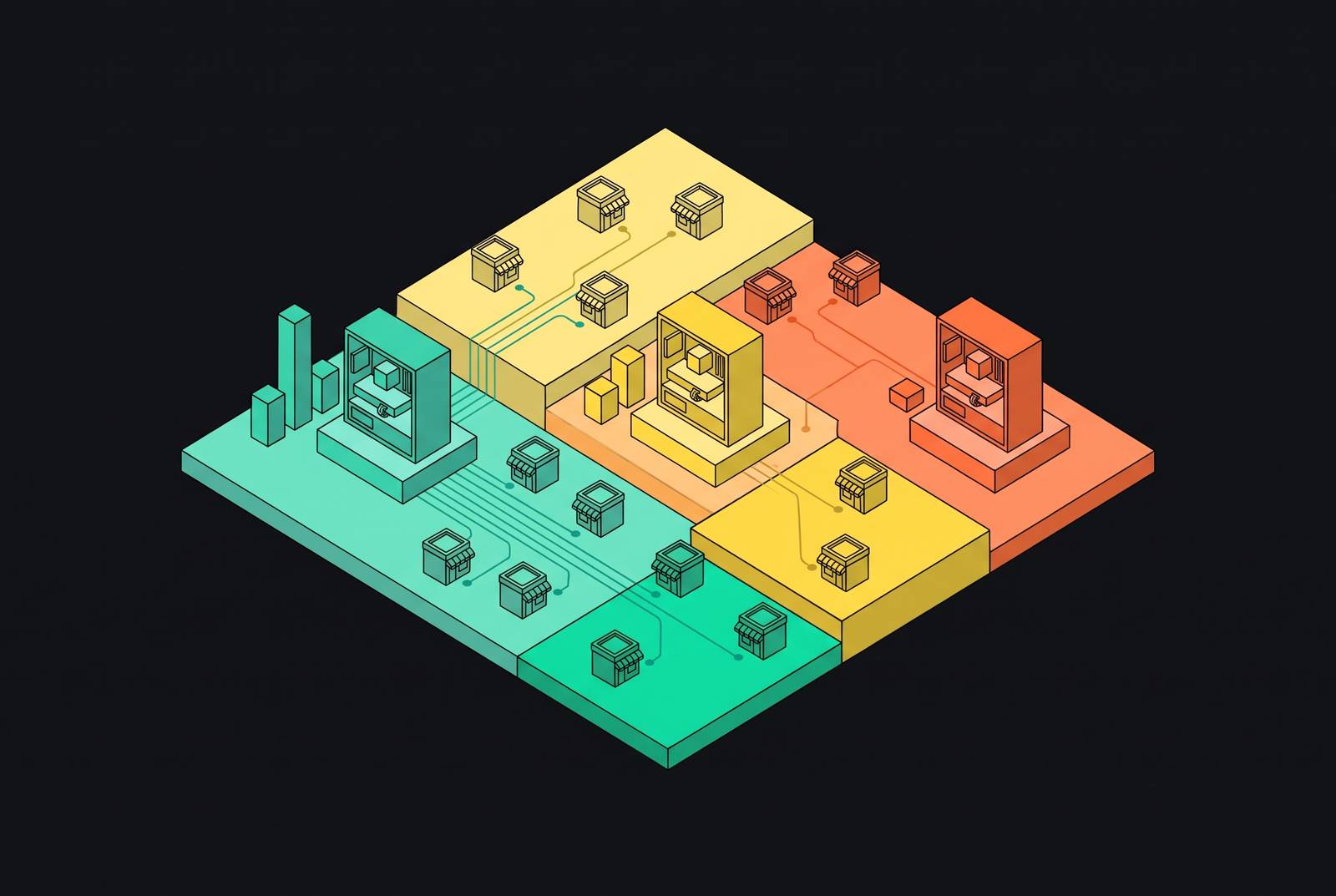
Regional retailer coverage is how a platform shows the sellers, prices, and stock in a given market. At its shallowest, it means converting prices from one market into another currency. At its deepest, it means indexing multiple local retailers and refreshing their prices and availability daily or several times a day. A total in your own currency can still come from shops you cannot use.
Retailer breadth is the first useful distinction. Coverage drawn from Amazon alone is different from coverage that includes Amazon, Cdiscount, Fnac, LDLC, Alternate, Caseking, and other sellers relevant to the country. Refresh frequency is a separate question because component prices can spike and recover within hours. A broad retailer list does not make old prices current.
A stock flag needs to describe the local warehouse, since inventory at a US or central-EU distribution node may be inaccessible on the displayed terms. Likewise, a claim of “25 supported regions” does not by itself establish deep local coverage. A platform may get its data from a single aggregator feed, bypassing the APIs of each local retailer.
How the current component pricing environment makes regional accuracy more consequential
Newegg Insider describes the 2026 memory-price pressure as a consequence of the AI infrastructure buildout, with suppliers prioritizing server DRAM and high-bandwidth memory. That shift puts pressure on the supply of conventional DRAM and drives up prices for buyers who buy parts one at a time. Storage suppliers are also reallocating capacity toward the infrastructure market. This is not just a currency problem. Even a local price can be too old to help set a budget if the update comes too late.
The pressure reaches beyond the price of new parts. Some components are backordered for weeks, while the second-hand market has adjusted upward with new prices. So buying a used part may still leave the build over the budget set by an out-of-date listing. A platform showing yesterday's price can leave a builder planning around an offer that is no longer available. A price from a retailer that does not ship locally is less useful still.
These pressures hit DIY buyers harder than prebuilt companies that buy at wholesale volumes. With parts costing more and alternatives constrained by availability, an inaccurate total leaves less room to adjust. Dependable local data becomes more consequential than broad coverage under those conditions.
Planning tools with regional coverage: what each one actually indexes
DropReference launched in May 2021 through a French company and takes a Europe-first approach to price and stock tracking. It covers retailers across France, the eurozone, the UK, and the US, including Amazon, Cdiscount, Fnac, Alternate, Caseking, and LDLC. Prices refresh several times a day. That cadence is useful when a component's price rises and falls within hours, a faster pattern than gradual movement over weeks. Its appeal rests on both the named retailer coverage and the frequency of those updates.
The service also offers Community, Guided, and Expert modes, with a large membership participating in its Community build-together mode. Coverage still has limits, however. DropReference does not cover every European market, and its unified EU interface trades some local retailer granularity for usability. Builders can make a more useful comparison by looking at their own country than at Europe as a whole.
Pangoly, based in Milan, Italy, offers 25 regions, including the US, UK, Canada, Australia, France, Germany, Spain, and Italy. It pulls prices from local retailers in each covered region. Its distinguishing feature is price history, with category trends extending up to five years. That changes the question a builder can investigate. Instead of looking only at which listed component is cheapest now, the builder can examine how prices have changed over a longer period.
A long trend can help with the timing of a purchase, while a fresh local listing helps establish whether today's budget is realistic. Neither feature substitutes for accurate local stock information. Likewise, a larger regional footprint does not establish that every country has the same retailer depth.
DropReference combines a Europe-first retailer selection with several updates per day, while Pangoly combines a broad regional footprint with longitudinal price data. A builder watching short-lived local price changes has a different need from one studying a buying window over several weeks. Both still retain responsibility for sourcing the parts. That responsibility is where the next category departs from planning tools.
Assembly and boutique services: regional coverage works differently when someone else is buying the parts
Assembly and boutique services address regional sourcing by purchasing the components themselves. They are not simply price trackers with an assembly option attached. The buyer chooses a system or configuration, while the service handles the sourcing decisions behind it. This removes a task from the buyer's workload, but introduces constraints around geography, component choice, and price. It is a distinct product with its own trade-offs.
iBUYPOWER serves buyers in North America who want help choosing a budget-to-mid configuration. Its Easy Builder mode recommends a system based on budget and intended games, rather than asking the buyer to start with every individual component. Its 2026 warranty terms include three years of labor, with parts coverage tiered by order date and return shipping covered on warranty repairs. Its nationwide Micro Center collaboration also extends warranty service to in-store repair and diagnosis. The geographic limit is clear, however. This North America-focused service is not a solution for European or Asia-Pacific builders.
NZXT BLD emphasizes aesthetic coherence and offers a narrower component selection than open-market planners. For buyers seeking a simpler evaluation of motherboard and PSU options, that narrower choice can be useful. Buyers have less freedom to choose each part on its own. Its approach suits a buyer whose goal is a coherent finished system.
Singularity Computers is based in Australia and serves a different part of the market. It is known for elaborate water-cooling cases, distribution plates, reservoirs, and water-cooling components, and accepts requests for complete custom-built systems. These are functional showpieces with extensive custom water cooling. For Asia-Pacific buyers who want boutique work, this offers something different from a tool for planning around local prices.
AVADirect provides another form of breadth through its catalog of custom gaming desktops, workstations, mini PCs, quiet PCs, liquid-cooled systems, rackmount computers, servers, and specialized configurations. It also offers custom paint, etching, and decals on eligible systems. The buyer is comparing what can be commissioned.
How geography, budget, and build intent should drive platform choice
The decision framework starts with where the parts will be bought, then what the buyer wants to optimize. For a DIY builder, the first requirement should be usable local retailer coverage. The buyer then needs to prioritize today's price, the longer buying window, or the work of sourcing at all. Those are different jobs. Choosing a tool to fit the job helps a buyer weigh which features matter most.
For builders seeking a broad regional starting point, particularly outside North America and Western Europe, Pangoly's coverage is a useful place to begin if their country is included. Its price history can help when the decision turns on movements over weeks, a longer window than hours. A broad starting point is not a guarantee of deep coverage in every market. The builder still needs to check which local sellers the listings come from. Budget decisions should rest on those sellers.
That recommendation depends on whether its indexed shops serve the builder's country. Its unified interface may simplify planning, but the local coverage gaps do not disappear because the interface spans the EU. A buyer whose market is missing needs a different source of local information.
For buyers who do not want to manage sourcing, assembly and boutique services are the more direct fit. The same can apply where local retailer coverage is thin, provided the service actually serves the buyer's region. iBUYPOWER addresses demand in North America, NZXT BLD suits buyers who value aesthetic coherence and a narrower selection, and Singularity Computers is relevant to Asia-Pacific buyers seeking boutique work. The exchange is reduced sourcing work for a price premium and some loss of component flexibility. AVADirect's range is relevant when the intended system falls into a specialized category beyond standard gaming builds.
Using several planning tools is a reasonable counterargument to choosing one. A builder could use Pangoly for price history, DropReference for current EU pricing, and a separate visualization tool. But that workflow requires manual reconciliation of compatibility across tools, reintroducing errors that integrated planning is designed to prevent. Favor a combined compatibility, pricing, and visualization workflow where its regional coverage meets the buying need.
What to verify before committing to any platform's regional pricing
Before finalizing a budget, check the specific retailers indexed for your country. A platform covering Europe may list only two or three shops in your market while covering ten in France or Germany. Check the refresh cadence explicitly too. Daily updates are not equivalent to several updates per day when memory or GPU prices move within hours.
Next, compare at least one displayed component price with the retailer's own website. This one-minute check can catch caching errors and currency conversion lag before the aggregate total becomes the budget. Confirm what the availability flag represents as well. Local warehouse stock is different from inventory at a central distribution node that may not ship to your country within the displayed timeframe.
For a build that depends on a particular part remaining available at a particular price, treat the platform's data as preliminary research pending order confirmation. The retailer has the final say on the purchase. Coverage helps identify an opportunity, but only the seller can confirm that you can buy it.